
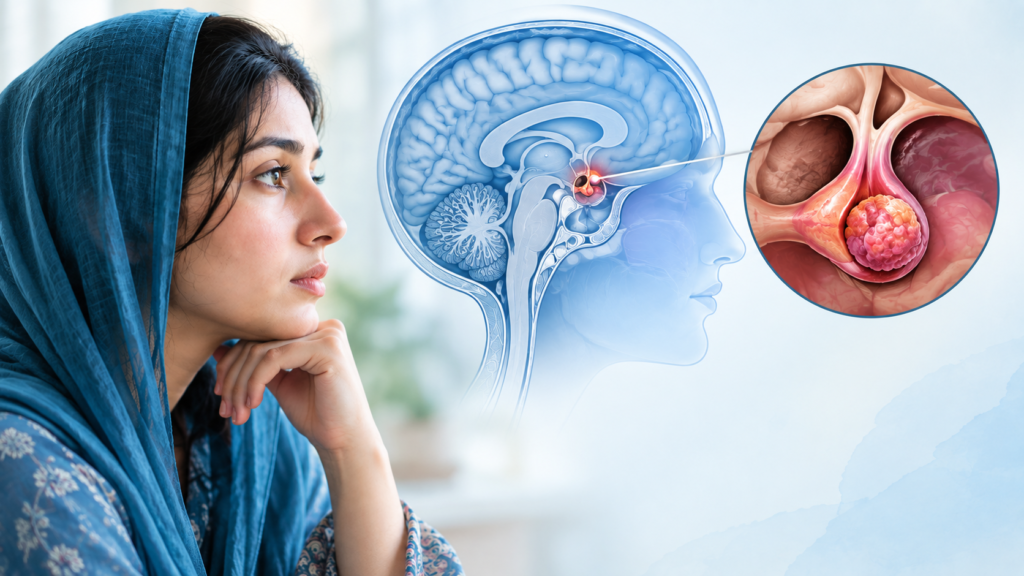
Her subsequent diagnosis of hyperprolactinaemia, a condition characterized by abnormally high levels of the hormone prolactin, marked the beginning of a difficult medical journey. Her reported prolactin level was 1,675 ng/mL, compared with the laboratory reference range of 5–20 ng/mL she provided.
Sania also reported a low insulin-like growth factor 1 (IGF-1) level of 8.6 nmol/L, below her stated reference range of 17.74–58.88 nmol/L. She has described undergoing two surgeries during her year-long battle with the illness if her tumor size exceeded 10 mm. Currently, she is fighting an 8.5 mm tumor.
Behind these laboratory results is a deeply personal experience: a woman who sought answers about her fertility but discovered a condition that demanded urgent attention to several aspects of her health.
Her experience raises a broader question about women’s healthcare: how many symptoms go unrecognized when reproductive health concerns are considered in isolation?
A Hormone that Disrupted an Entire Life
Prolactin is a hormone essential for reproductive health, particularly for breast milk production after childbirth. However, abnormally elevated prolactin levels can disrupt the body’s hormonal balance, affecting fertility, menstruation and sexual health.
Known as hyperprolactinaemia, this condition can affect both women and men, although its symptoms and patterns of diagnosis may differ. It has several possible causes, including prolactin-secreting pituitary tumours, certain medications, hypothyroidism and kidney disease. In women, elevated prolactin levels can cause irregular or absent menstruation, infertility, unexpected breast milk production (galactorrhoea) and reduced libido. Prolonged hormonal disruption may also contribute to bone loss.
In men, hyperprolactinaemia can lead to reduced testosterone levels, decreased libido, infertility and, less commonly, breast enlargement or milk production. Because symptoms may develop gradually or remain unrecognized, diagnosis in men can sometimes be delayed until a tumor grows large enough to cause persistent headaches or visual disturbances.
According to the 2023 international consensus statement published in Nature Reviews Endocrinology, prolactinomas are the most common hormone-secreting pituitary tumors. They account for approximately half of all pituitary adenomas. Among adults aged 25–44, they predominantly affect women, with a female-to-male ratio of approximately 5:1 to 10:1. These figures illustrate the importance of recognizing the condition, particularly among women of reproductive age. However, elevated prolactin does not necessarily indicate a prolactinoma, as several medications and other medical conditions can also cause hyperprolactinaemia. Although most prolactinomas are benign, they can still pose significant health risks. Larger tumors may compress nearby structures, threaten vision or interfere with the production of other essential pituitary hormones. While some remain small and respond well to treatment, others require more complex medical management.
The international consensus identifies dopamine agonists, particularly cabergoline, as an important treatment option because they can lower prolactin levels and shrink many prolactinomas or tumors. Surgery is appropriate in selected cases, including some patients who cannot tolerate or do not respond adequately to medication.
Sania’s experience of undergoing two operations illustrates the complexity that can arise in individual cases. However, surgery is not inevitable for everyone diagnosed with a prolactinoma, and the number of operations alone does not establish whether a tumor is life-threatening.
For women, the consequences can extend into fertility, menstruation, pregnancy planning, bone health and emotional wellbeing. The appropriate treatment and long-term outlook depend on the tumor, hormonal findings and individual response to care.
Also Read: Shifa — Sindh: The 17-Year-Old Who Turned Fog Into a Vision for Clean Energy
Can Women Prevent This Disease?
One of the most important lessons from Sania’s experience is the distinction between preventing a disease and preventing its complications.
There is no established lifestyle intervention, dietary plan, screening test, or vaccine that currently prevents prolactinomas or most other causes of hyperprolactinaemia. Women should not be made to feel responsible for developing this condition.
However, timely recognition, appropriate investigations and treatment can help prevent some of the complications associated with an undiagnosed pituitary tumor.
1.Recognize Unusual Hormonal Changes
Persistent irregular or absent periods, unexplained milk production when not breastfeeding and difficulty conceiving may warrant a medical assessment. These symptoms do not necessarily indicate a tumor, but you should not dismiss them automatically.
2.Take Neurological Symptoms Seriously
Persistent or worsening headaches, blurred vision and loss of peripheral vision require medical evaluation. Sudden severe headaches, abrupt visual loss or fainting accompanied by severe symptoms require emergency assessment because they can indicate serious complications.
3.Seek Appropriate Hormonal Testing
When symptoms suggest hyperprolactinaemia, clinicians may measure prolactin and investigate other possible causes, including thyroid dysfunction, pregnancy, medication effects and kidney disease. Persistently elevated levels may warrant further investigation and, where indicated, pituitary MRI.
4.Maintain Appropriate Follow-Up
Women diagnosed with a pituitary disorder may require regular hormonal assessments, visual examinations and repeat imaging, depending on their diagnosis and treatment. Women planning pregnancy should discuss their treatment and monitoring with an endocrinologist.
These measures cannot guarantee that a pituitary tumor will be detected before it causes symptoms. They can, however, help ensure that concerning symptoms receive appropriate attention and that diagnosed conditions are managed.
Why Adolescent Health Education Matters
Although Sania is an adult, her experience offers an important lesson for adolescent health services. Hormonal health education should begin well before adulthood, when girls are developing an understanding of menstruation, puberty and their changing bodies.
Adolescents may not know which symptoms require medical attention. In some communities, menstrual irregularities and other reproductive health concerns are rarely discussed openly. Embarrassment, limited health literacy, financial constraints and a lack of adolescent-friendly healthcare services can make it difficult for girls to seek help.
Not every irregular period during adolescence signals an endocrine disorder. Menstrual cycles can naturally vary during the first years after menstruation begins. Nevertheless, persistent menstrual abnormalities, unexplained milk production, severe headaches or visual disturbances should be assessed according to clinical guidance.
Schools, families, and healthcare providers can help by making age-appropriate health information accessible, protecting confidentiality, and ensuring girls can seek medical advice without stigma.
Education should also explain the difference between routine changes associated with puberty and symptoms that merit medical attention. This can help adolescents develop health literacy without creating unnecessary anxiety or encouraging self-diagnosis.
Prevention Begins with Accessible Healthcare
Sania’s experience also highlights a wider public health issue: access to appropriate healthcare is not simply a matter of having hospitals or doctors. Patients need services that can recognize symptoms, provide accurate testing and facilitate referrals to specialists.
For women with suspected pituitary disorders, care may involve gynaecologists, endocrinologists, radiologists, ophthalmologists and neurosurgeons. Coordination among these professionals can be particularly important when fertility concerns coexist with neurological symptoms.
For adolescent girls, accessible primary healthcare and age-appropriate counselling are equally important. A girl who understands her body and knows where to seek help is better equipped to recognize changes that require professional attention.
Health systems can support this through:
- Training primary healthcare workers to recognize symptoms of endocrine disorders.
- Improving access to affordable hormonal testing and diagnostic imaging when clinically indicated.
- Establishing referral pathways between primary healthcare, gynaecology, endocrinology and neurosurgery.
- Providing adolescent-friendly reproductive and preventive healthcare.
- Improving public awareness without creating fear or encouraging unnecessary testing.
These measures are particularly relevant to underserved communities, where specialist healthcare and diagnostic services may be difficult to access.
A Call for A More Responsive Approach to Women’s Health
Sania’s journey is not simply a story about a hormone level or a tumor. It is a reminder of how a complex medical condition can transform a woman’s life, particularly when its early symptoms overlap with concerns about fertility and pregnancy.
Her experience also illustrates the importance of looking beyond a single presenting complaint. A woman seeking help for infertility may also need assessment for endocrine or neurological conditions if she reports other concerning symptoms.
For adolescent girls, the lesson is equally significant. Health education should empower them to understand their bodies, recognize concerning changes and access appropriate care without fear or embarrassment.
For healthcare systems, the responsibility is to ensure that symptoms are investigated appropriately, referrals are timely, and treatment is guided by reliable clinical evidence.
Sania’s diagnosis cannot be prevented through awareness alone. But greater awareness, appropriate medical assessment and access to specialist care can help women avoid preventable complications and receive treatment when they need it.
Her story began with a hope of motherhood. It has become a broader reminder that women’s health deserves attention long before a medical crisis forces the issue.
Editorial Note: The patient’s name has been changed to protect her privacy and confidentiality. This article is based on information and personal accounts voluntarily shared by the patient. Global health statistics and clinical guidance on prevention and treatment have been drawn from authoritative sources, including the research papers.